The space before the shot: watch the player without the ball
Reading a basketball possession starts before the finish.
About the editorial teamEditorial standardsSuggest a correction
The shot is one of basketball’s most memorable movements. It has an arc, a rhythm and an outcome. But the situation from which the ball is released often makes sense only if we begin watching a few seconds earlier. This essay offers a spectator’s exercise for doing that.
Who left the space?
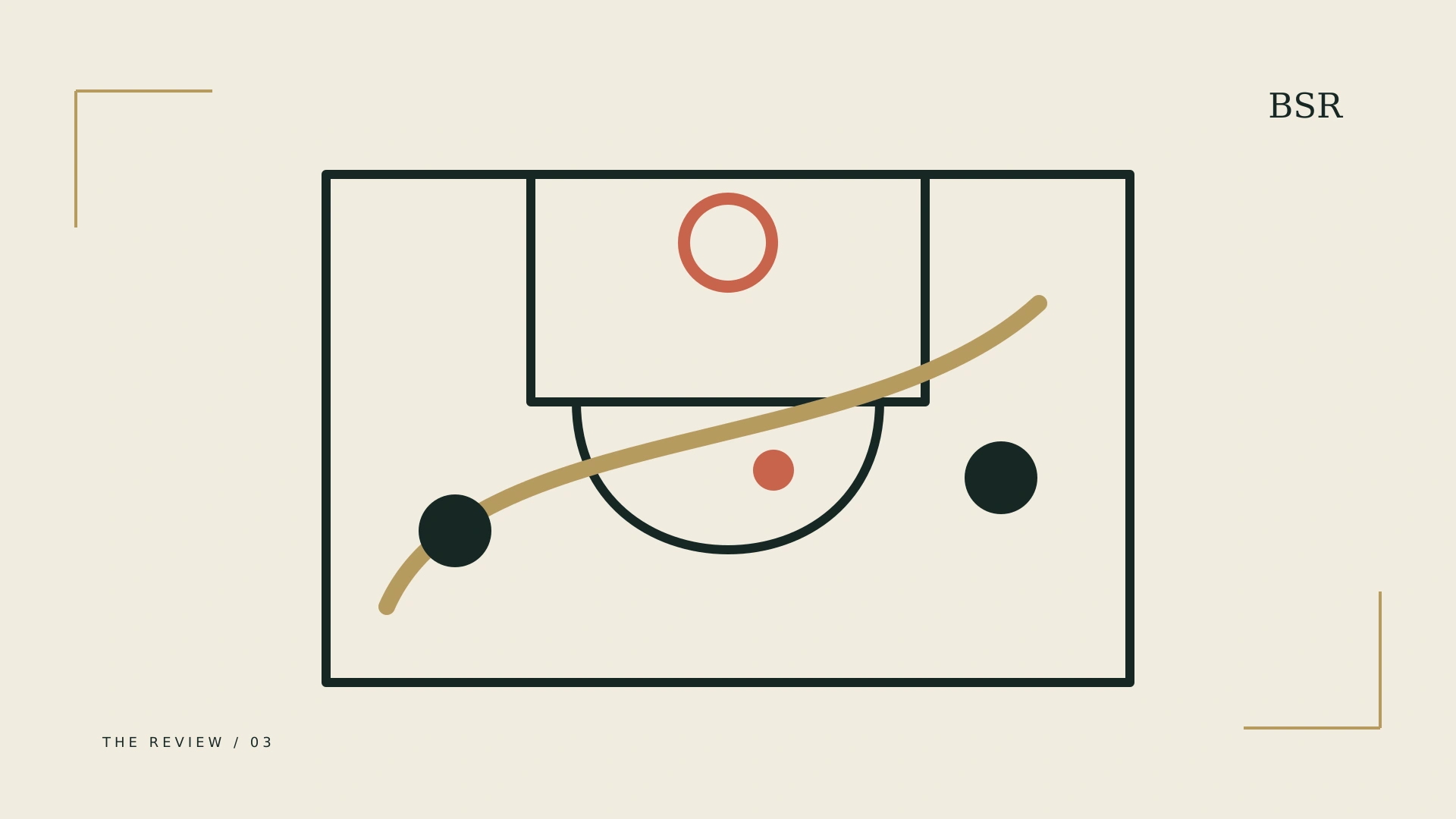
In an imagined possession, the ball is on one side and a player moves out of the opposite corner. They receive no pass and do not make the eventual finish. It is still worth asking: did their defender move with them, and what happened to the space they left?
The movement alone does not reveal the play’s design. It could be an agreed action or an adjustment to a developing situation. As viewers, we can describe the change before proposing an explanation.
A story of distances
When the ball-handler starts moving, look across the court too. Do teammates move closer together or leave more room? Who becomes available for the next pass? Which defender appears to be attending to two possibilities?
These questions do not require an immediate name for every offensive system. An accurate description of a short sequence can be more useful than an uncertain technical label. A wider camera angle is particularly helpful because a close-up around the ball excludes some of the available options.
Keep the limits of the picture in mind. If a player is outside the frame, the honest note is that you could not see the movement.
Do not let the finish rewrite the build-up
Imagine two similarly created opportunities: one shot goes in and the other misses. That difference matters to the score, but the construction of each opportunity can also be examined separately.
At the next replay, pause before the shot. Describe the choices you can see, then watch the scene continue. This makes it less tempting to explain everything through an outcome you already know.
The possession’s story includes its finish. Our attention can begin earlier, with the people and movements that helped make a choice possible.


